Elected Governance
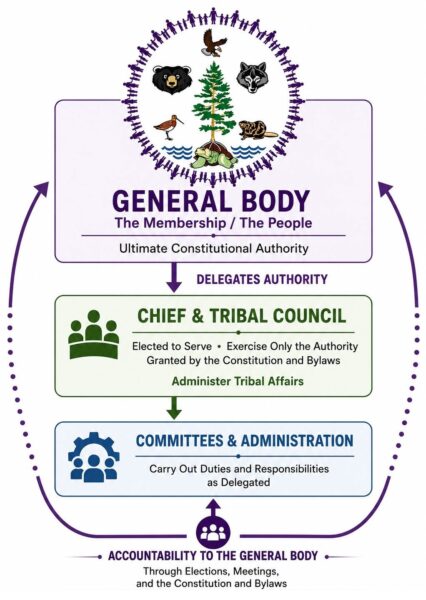
The Meherrin Indian Tribe conducts its governmental affairs under its 1996 Constitution and Bylaws through an elected form of government. All governmental authority originates with the General Body—the enrolled members of the Tribe. The General Body exercises that authority by electing Tribal officers and council members to serve on behalf of the people and in accordance with the Constitution and Bylaws.
The General Body consists of the enrolled members of the Meherrin Indian Tribe. Under the 1996 Constitution and Bylaws, the General Body holds important rights and responsibilities, including the election of Tribal officers and council members, consideration of enrollment recommendations, and other matters reserved to the membership. The General Body is the highest governing authority of the Tribe under the 1996 Constitution and Bylaws. Elected leaders derive their authority from the General Body and are responsible for carrying out their duties in accordance with the 1996 Constitution and Bylaws.
Meherrin Indian Tribe 1996 Constitution and Bylaws
Principles of Elected Governance
Under the 1996 Constitution and Bylaws, elected Tribal officials are entrusted with administering the affairs of the Tribe on behalf of the General Body. Their authority is delegated—not inherent—and may be exercised only as provided by the 1996 Constitution and Bylaws. Tribal government exists to serve the people, and promote the welfare and continued progress of the Tribe.
Elected Tribal Chief
The Tribal Chief serves as the chief executive officer of the Meherrin Indian Tribe and carries out the responsibilities assigned by the Constitution and Bylaws. The office exists to serve the Tribe through the General Body, from which all governmental authority is derived. Working in cooperation with the Tribal Council, the Chief exercises only the authority delegated by the General Body under the 1996 Constitution and Bylaws and remains accountable to the membership for the faithful execution of those duties.
Qualifications
To seek the office of Tribal Chief, a candidate must:
- Be at least 30 years of age
- Reside within 150 miles of the Tribe’s original and present geographic area
- Be a voting member of the Tribe
- Have served on the Tribal Council for at least one year
- Be well versed in the history of the Meherrin Tribe
- Have no felony convictions or outstanding warrants
- Be able to communicate effectively
- Possess at least a high school education or its equivalent
Elected Tribal Council
The Elected Tribal Council serves as the elected governing body of the Meherrin Indian Tribe and carries out the responsibilities assigned by the 1996 Constitution and Bylaws. The office exists to serve the Tribe through the General Body, from which its authority is derived, and remains accountable to the membership for the faithful execution of those duties. Working in cooperation with the Elected Tribal Chief, the Council exercises only the authority delegated by the General Body under the 1996 Constitution and Bylaws to promote the welfare, governance, and continued progress of the Tribe on behalf of the people.
Qualifications
To seek election to the Tribal Council, a candidate must:
- Be at least 25 years of age
- Not be a direct relative of a current Tribal Council member or reside in the same household, except as otherwise provided by the 1996 Constitution and Bylaws
- Reside within 300 miles of the Tribe’s original and present geographic area
Current Elected Chief : Wayne Melton

Wayne Melton currently serves as the Elected Tribal Chief of the Meherrin Indian Tribe pursuant to the Order of the Superior Court of Hertford County entered on May 12, 2026. The office is governed by the Tribe’s 1996 Constitution and Bylaws, under which the Chief serves the General Body and exercises only the authority granted by those governing documents.
Current Term of Office
Pursuant to the Order of the Superior Court of Hertford County entered on May 12, 2026, Wayne Melton was reinstated to the office of Tribal Chief and shall continue to serve until May 31, 2027. An election for the office of Tribal Chief shall be conducted in accordance with the 1996 Constitution and Bylaws.
Election Notice
Pursuant to the Order of the Superior Court of Hertford County entered on May 12, 2026, elections for the Tribal Council and other elected Tribal offices shall be conducted in accordance with the 1996 Constitution and Bylaws as soon as practicable and shall be completed no later than November 8, 2026.
Current Status of the Tribal Council
Pursuant to the Order of the Superior Court of Hertford County entered on May 12, 2026, elections for the Tribal Council and other elected Tribal offices are to be conducted in accordance with the 1996 Constitution and Bylaws and completed no later than November 8, 2026.
Pursuant to the Court’s Order, the elected Council positions are presently vacant pending the election required under the 1996 Constitution and Bylaws.
Current Council Offices
These positions are presently vacant pending the election ordered by the Superior Court.
- Council Chairperson — Vacant
- Councilor — Vacant
- Treasurer — Vacant
- Secretary — Vacant
- Tribe Administrator — Vacant
An election for these offices is to be conducted in accordance with the 1996 Constitution and Bylaws.
Traditional Governance / Clan System
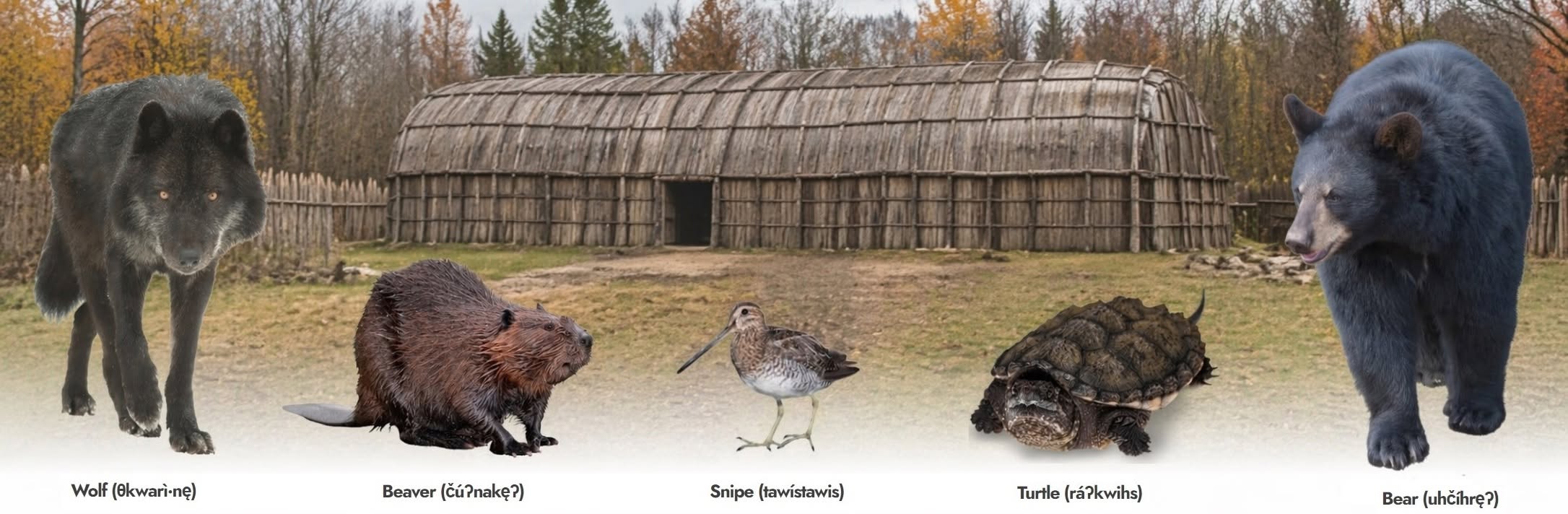
Long before the adoption of a written 1996 Constitution and Bylaws, the Meherrin (Kauwetsʔa·ka – People of the Water) governed themselves through a traditional system based upon clans, kinship, and consensus. The Clan System served as the foundation of Meherrin society, providing leadership, maintaining social order, preserving cultural traditions, and strengthening the bonds between families and future generations.
Today, the Meherrin Indian Tribe conducts its governmental affairs under its 1996 Constitution and Bylaws through an elected form of government. At the same time, the traditional Clan System remains an important part of Meherrin history, culture, identity, and heritage.
The preservation and revitalization of the Clan System reflects the Tribe’s ongoing commitment to honoring the wisdom of its ancestors while strengthening the language, culture, and traditions that define the Meherrin people.